Table of Contents
Are Smoothie Bowls Actually Healthy? The Real Answer
The Sugar Shock You Didn't See Coming
You grab a vibrant açai bowl after a morning workout, convinced you're making a smart choice. Then you glance at the nutrition label—or worse, there isn't one—and realize you've just downed 65 grams of sugar without breaking a sweat. That's nearly double the 39 grams in a 12-ounce cola. Even when the sugar comes from fruit, your body reacts similarly if the load hits all at once without enough fiber, fat, or protein to slow digestion. A 2020 analysis of chain smoothie bowls found the average bowl contained 64 grams of sugar, pushing many over the American Heart Association's daily limit of 25 grams for women and 36 grams for men. The takeaway: Don't assume a bowl's halo cancels out its sugar punch. Check posted nutrition stats, and if you're blending at home, treat fruit as a measured ingredient, not an unlimited free pass.
Base Builders: Fruit, Juice, or a Smarter Mix
What you pour into the blender forms the nutritional backbone of your bowl, and that decision can make a 300-calorie difference before you add a single topping. Many cafés and chains use apple juice, sorbet, or sweetened yogurt as the liquefying agent. One cup of apple juice delivers 24 grams of sugar and zero fiber, essentially turning your bowl into liquid candy with a spoon. In contrast, blending a whole banana (14 grams of sugar, 3 grams of fiber) with a handful of frozen mixed berries and unsweetened almond milk gives you natural sugars wrapped in fiber, vitamin C, and only about 180 calories for the entire base. A 2019 study in the journal *Nutrients* observed that people who used whole fruits instead of juice in blended meals reported 22% greater fullness two hours later. So, skip the juice altogether. Your go-to base formula: two parts frozen fruit or low-sugar vegetables (cauliflower, zucchini) and one part unsweetened plant milk or water, plus a handful of spinach you'll never taste. That simple swap cuts sugar while keeping the thick, spoonable texture you want.
Nutrition Science: The CDC reports that only 1 in 10 American adults eat the recommended 2-3 cups of vegetables daily. Adding one extra serving per meal reduces heart disease risk by 4%.
Toppings That Tip the Scale
Toppings are where a well-meaning bowl quietly becomes a dessert. You're layering on crunch and color, but the numbers stack up fast. Just a quarter cup of commercial granola adds around 150 calories and 12 to 15 grams of sugar—often from honey, maple syrup, or cane sugar hiding behind a “natural” label. Drizzle on two tablespoons of honey and you've tacked on another 34 grams of sugar. Research published in *Appetite* found that people underestimate the calorie content of topping-heavy bowls by an average of 37%, mostly because those ingredients look modest on a spoon. Your fix: treat toppings like a condiment, not a main event. Measure out one tablespoon of granola, or swap it for crushed toasted nuts or pumpkin seeds that bring protein and healthy fat. Choose unsweetened shredded coconut, a dusting of cinnamon, or fresh raspberries that burst with sweetness for negligible sugar. And when you're at a build-your-own shop, ask for toppings on the side so you control the final pour. The visual beauty of a bowl doesn't have to come with a sugar crash at 10 a.m.
Why Your Bowl Might Be Leaving You Hungry
A bowl brimming with mango, banana, and pineapple looks like a satisfying meal, but if it's light on protein and fat, you'll likely be rummaging through the snack drawer within an hour. A typical all-fruit bowl contains a measly 5 to 8 grams of protein—far short of the 20 to 30 grams that trigger satiety hormones such as peptide YY and keep ghrelin, the hunger hormone, in check. A 2018 clinical trial in the *Journal of Nutrition* showed that participants who ate a high-protein breakfast (30 grams) experienced a significantly greater reduction in ghrelin and ate 175 fewer calories at lunch compared to those who had a high-carb, low-protein meal. A fruit-only bowl mirrors that high-carb scenario, spiking your blood sugar and setting you up for a mid-morning energy dip. The fix is easy: add a scoop of plain Greek yogurt (12 grams of protein per half-cup), a tablespoon of almond or peanut butter (4 grams protein plus fat), or a serving of unflavored collagen or pea protein powder. Aim for at least 15 grams of protein in every bowl. That number—paired with the existing fiber—keeps your blood sugar steady and your appetite satisfied until your next meal.
The Real Healthy Bowl Formula
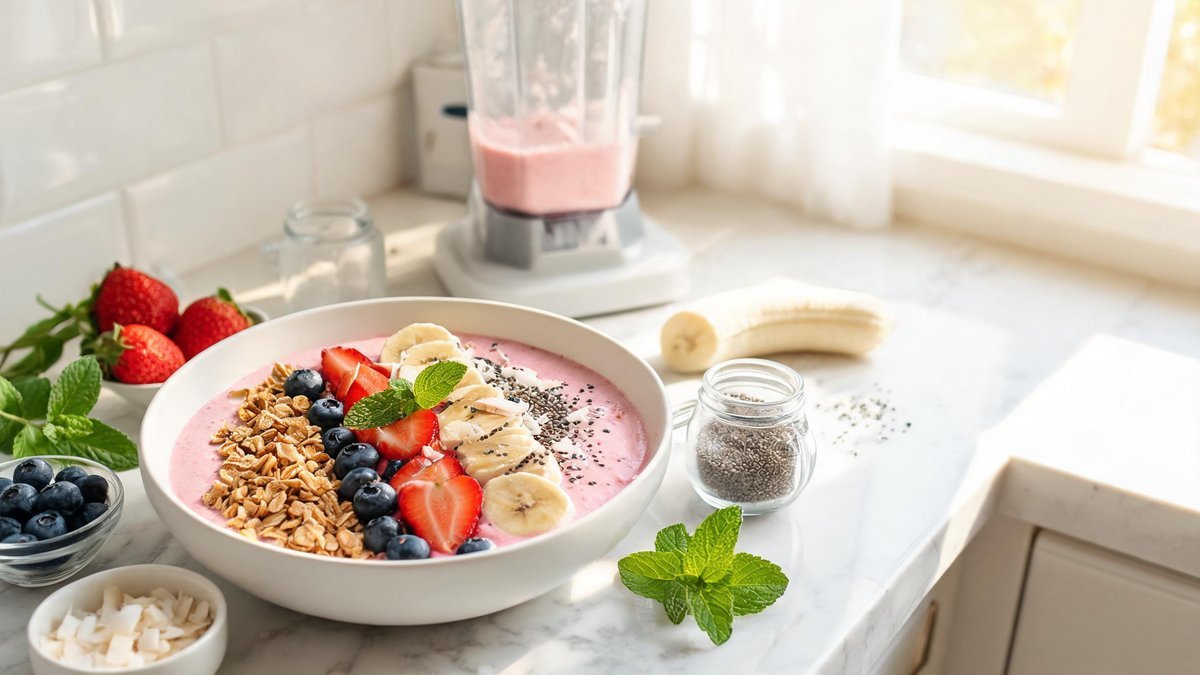
You don't have to banish smoothie bowls from your rotation. Instead, apply a simple build-it-right framework that flips the typical macro split. Start with a 50% veggie-and-low-sugar-fruit base: one cup frozen cauliflower florets or mild greens like spinach plus half a cup frozen mixed berries. That foundation provides vitamin C, fiber, and fewer than 15 grams of sugar. Next, layer in 25% protein and healthy fat: half a cup of plain skyr or silken tofu, one tablespoon of nut or seed butter, and a splash of unsweetened oat milk to get the blades moving. Finally, reserve the last 25% for nutrient-dense toppings that add texture without a sugar avalanche: one teaspoon chia seeds, a tablespoon of hemp hearts, a few fresh blackberries, and maybe a square of dark chocolate grated on top for that “café” feel. The numbers on this build? You'll land around 415 calories, 22 grams of protein, 18 grams of fiber, and only 28 grams of sugar—roughly half the sugar of a standard takeout bowl and nearly four times the protein. Use this formula as a flexible template. Swap cauliflower for frozen zucchini, berries for tart cherries, and yogurt for fortified silken tofu if you're dairy-free. The goal is a bowl that tastes indulgent but performs like a balanced meal, keeping your energy even, your muscles fed, and your sugar cravings quiet. Pre-portion your frozen bases on Sunday so you can build a genuinely healthy bowl in under five minutes any morning of the week.
Building a healthy eating pattern does not require drastic changes or eliminating entire food groups. Small, consistent adjustments produce results that last far longer than crash diets or extreme elimination protocols. The most effective approach is to add nutritious foods to your diet rather than focusing on what to remove. A handful of leafy greens added to your lunch, an extra serving of vegetables at dinner, or swapping refined grains for whole grains at one meal per day creates momentum that naturally displaces less nutritious options without the deprivation mindset that undermines most dietary changes. Over weeks and months, these micro-habits compound into meaningful improvements in energy levels, digestion, and overall health markers.
Meal preparation is the single most effective strategy for maintaining a healthy diet during a busy week. Setting aside two to three hours on a Sunday to wash and chop vegetables, cook a batch of whole grains, portion out proteins, and prepare a simple dressing or sauce eliminates the daily decision fatigue that leads to takeout and convenience foods. Invest in a few good-quality glass containers that allow you to see contents at a glance. Focus on components rather than complete meals -- having prepped ingredients on hand lets you assemble different combinations throughout the week without eating the same thing every day. The time invested in meal prep pays back dividends in reduced stress, better food choices, and significant cost savings.
Understanding the science behind nutrition helps separate evidence-based recommendations from the endless stream of diet trends and marketing claims. The quality of research matters enormously -- randomized controlled trials carry far more weight than observational studies, and systematic reviews that pool data from multiple studies provide the most reliable guidance. Be particularly skeptical of studies funded by food manufacturers or organizations with a vested interest in the outcome. A healthy dose of scientific literacy serves you well in navigating conflicting nutrition advice. When in doubt, the fundamentals are remarkably consistent across decades of research: eat plenty of vegetables and fruits, choose whole grains over refined, prioritize plant and fish proteins, and limit added sugars and ultra-processed foods.
Mindful eating transforms your relationship with food by shifting focus from rigid rules to genuine awareness. Paying attention to hunger and fullness cues, eating without distractions like phones or television, and savoring each bite allows your body's natural regulation systems to function correctly. Research shows that mindful eating practices reduce binge eating episodes, improve digestion, and lead to more satisfying meals with smaller portions. Start with a simple practice: before each meal, take three deep breaths and observe the colors, aromas, and textures on your plate. Eat slowly, putting your fork down between bites, and pause midway through to assess your fullness level. These small adjustments rewire deeply ingrained eating habits over time.
Eating well on a budget is entirely achievable with strategic planning and some simple techniques. Frozen vegetables and fruits are just as nutritious as fresh -- often more so, since they are flash-frozen at peak ripeness -- and cost significantly less while lasting far longer. Dried beans and lentils cost pennies per serving compared to canned versions and allow you to control sodium. Whole grains purchased in bulk from the bins section of your grocery store cost a fraction of packaged alternatives. Seasonal produce is both cheaper and more flavorful than out-of-season imports. Planning your weekly menu around what is on sale rather than deciding what you want and hoping for a deal can cut your grocery bill by 20 to 30 percent without sacrificing nutritional quality.
Gut health has emerged as one of the most important areas of nutritional science, with research revealing that the trillions of bacteria living in your digestive tract influence everything from immune function to mood regulation to weight management. Feeding your gut microbiome a diverse range of fiber sources -- soluble fiber from oats and beans, insoluble fiber from vegetables and whole grains, and prebiotic fiber from garlic, onions, and bananas -- supports a healthy and diverse bacterial ecosystem. Fermented foods like yogurt, kefir, sauerkraut, and kimchi introduce beneficial probiotics directly. Limiting artificial sweeteners, emulsifiers, and excessive alcohol helps protect the gut lining from inflammation and permeability issues that can trigger broader health problems.