Table of Contents
- Healthy Snacks That Keep You Full Between Meals
- 1. Choose Protein Over Processed Carbs
- 2. Fill Up on Fiber Without the Bloat
- 3. Let Healthy Fats Slow Your Digestive Roll
- 4. Master Volume Eating With Low-Calorie Density
- 5. Pair Two Macros for a Satiety Synergy
- 6. Time Your Snacks to Work With Your Body Clock
Healthy Snacks That Keep You Full Between Meals
You reach for a granola bar at 3 p.m., and thirty minutes later you're eyeing the chip bag. Sound familiar? The problem isn't your willpower—it's that your snack didn't have enough staying power. Healthy snacks that keep you full between meals do more than fill a gap. They stabilize your blood sugar, keep your energy steady, and help you avoid overeating later. In this article, you'll learn the nutritional building blocks of satiety and how to combine them into simple, delicious snacks that actually tide you over.
1. Choose Protein Over Processed Carbs
Protein is the heavyweight champion of satiety. When you eat a snack rich in protein, your body triggers a cascade of hormones like peptide YY and GLP-1 that signal fullness to your brain. A 2020 review in Nutrition Research Reviews found that snacks providing 15–20 grams of protein reduced perceived hunger by nearly 50% compared to isocaloric, carbohydrate-heavy snacks. That's a massive difference in how satisfied you feel.
Processed carbs, on the other hand, spike your blood sugar and lead to a rapid crash. You'll feel hungry again almost as soon as you put down the wrapper. The protein advantage isn't just theoretical—one study published in the Journal of Nutrition observed that participants who ate a high-protein afternoon snack consumed 8% fewer calories at dinner without trying to restrict themselves.
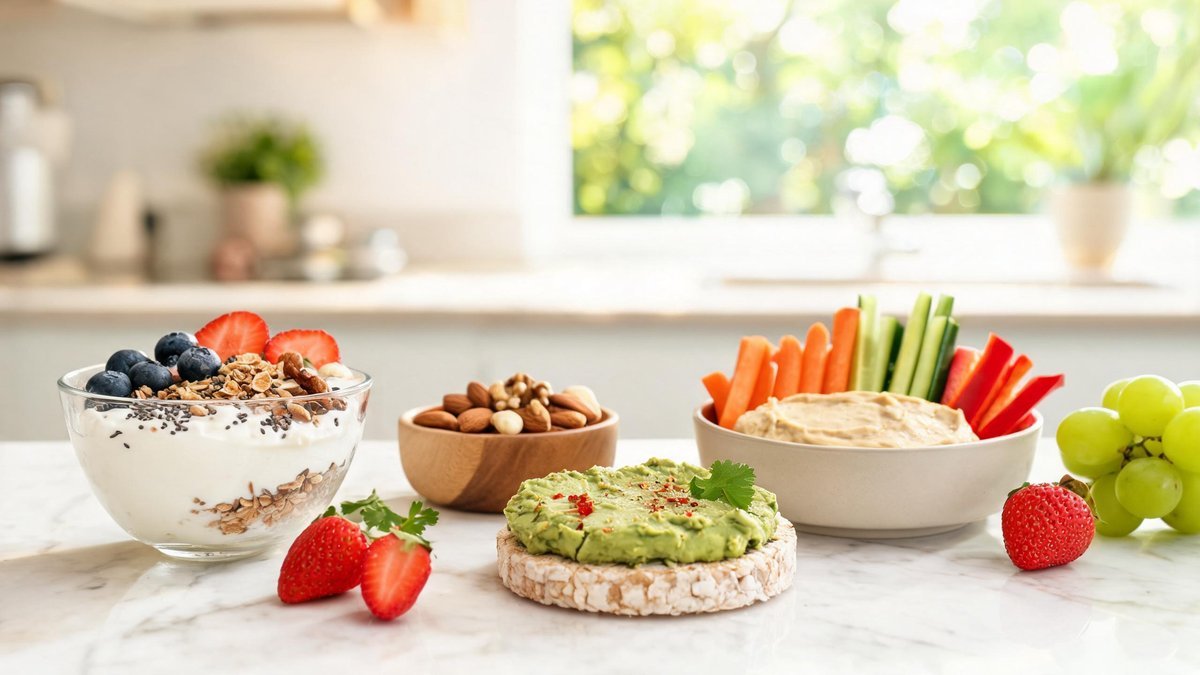
Practical takeaway: Swap your rice cakes or pretzels for Greek yogurt, a hard-boiled egg, or a handful of edamame. Aim for at least 12 grams of protein per snack. Cottage cheese with cherry tomatoes, a turkey roll-up with a slice of avocado, or a small protein shake all work wonders. Keep pre-portioned servings in your fridge so you don't reach for less filling options when hunger strikes.
2. Fill Up on Fiber Without the Bloat
Fiber slows down digestion by forming a gel-like substance in your stomach. This not only delays gastric emptying but also stimulates stretch receptors that tell your brain you're full. A 2019 intervention trial from the University of Minnesota found that people who added 14 grams of fiber to their daily snack routine ate 9% fewer calories at dinner—without any additional effort.
Nutrition Science: Chronic stress raises cortisol, which increases belly fat storage and cravings for high-sugar foods. Just 10 minutes of daily meditation can lower cortisol by 15%.
You might worry that fiber leads to bloating, but you can sidestep that by introducing it gradually and pairing it with enough water. Soluble fiber from oats, apples, and beans is particularly gentle while still being incredibly filling. An added perk: fiber feeds your good gut bacteria, which produce short-chain fatty acids that further regulate appetite.
Practical takeaway: Build a snack around at least 5 grams of fiber. Try a small apple with the skin on (4.4 grams), a cup of raspberries (8 grams), or two tablespoons of chia seeds stirred into a little unsweetened almond milk. Carrot sticks dipped in black bean hummus deliver both crunch and lasting fullness. Start with a smaller serving if your digestive system isn't accustomed to high-fiber foods, then increase over a week.
3. Let Healthy Fats Slow Your Digestive Roll
Fats take longer to break down than carbs or protein, so they naturally keep you satisfied longer. They also trigger the release of cholecystokinin, a hormone that puts the brakes on stomach emptying and sends a strong “I'm full” signal. A randomized controlled trial in the journal Obesity tracked 26 adults and found that those who included half an avocado in their afternoon snack felt 23% less hungry over the next five hours and had a lower desire to eat.
The key is choosing unsaturated fats—mono and poly fats—instead of saturated ones. Nuts, seeds, avocado, and olive oil not only boost fullness but also support heart health. A one-ounce serving of almonds (about 23 nuts) provides 14 grams of healthy fat and 6 grams of protein for under 170 calories.
Practical takeaway: Don't fear the fat. Keep pre-portioned packs of mixed nuts in your desk drawer, spread almond butter on celery sticks, or drizzle extra virgin olive oil over a bowl of cherry tomatoes and a pinch of sea salt. The combination of fat and a little protein keeps hunger pangs at bay for hours. Just watch portions—stick to about a thumb-sized serving of nut butter or a small handful of nuts.
4. Master Volume Eating With Low-Calorie Density
Volume eating isn't about counting every leaf of lettuce. It's about choosing foods with a high water and fiber content so you can eat a larger portion without overloading calories. Your stomach has stretch receptors that fire “stop eating” signals based on physical volume as much as calories. Penn State's Human Ingestive Behavior Lab famously demonstrated that eating a large, low-calorie soup or salad before a meal reduced total meal calories by 20%.
Apply that logic to snacks. A couple of rice cakes might be 70 calories, but they're mostly air. However, a full plate of crunchy cucumber slices, bell pepper strips, and a generous handful of air-popped popcorn delivers visual satisfaction and digestive fullness for a similar calorie count, along with more nutrients.
Practical takeaway: Build a snack platter with at least two cups of non-starchy veggies and a protein-rich dip. Greek yogurt mixed with herbs makes a creamy dip for radishes and snap peas. Or whip up a simple salsa with diced tomatoes, onion, and cilantro. You'll feel like you've eaten a meal, not a snack. For a warm option, a mug of vegetable broth with a few added edamame beans hits the spot on chilly afternoons.
5. Pair Two Macros for a Satiety Synergy
Single-macro snacks rarely satisfy for long. When you combine protein and fiber, or fat and fiber, you create a synergistic effect that tackles hunger from multiple angles. A study published in Appetite asked participants to snack on apple slices alone or apple slices with almond butter. The protein-fiber duo prolonged fullness by an average of 45 minutes and reduced subsequent snacking on ultra-processed foods later in the day.
The combination works because each macronutrient uses a different pathway to slow digestion and signal the brain. Protein triggers satiety hormones; soluble fiber adds bulk and slows sugar absorption; healthy fat stretches out the digestive timeline. Together they create a steady blood sugar curve that keeps your energy and mood stable.
Practical takeaway: Think in pairs. A banana with a smear of peanut butter. A string cheese stick with a small pear. A hard-boiled egg with a slice of whole-grain toast. Roasted chickpeas tossed with a little olive oil and smoked paprika. Prepare these combos in advance and stash them in grab-and-go containers. When you're meal prepping on Sunday, portion out five snack bags with your favorite dual-macro pair so you're armed against the 3 p.m. slump all week.
6. Time Your Snacks to Work With Your Body Clock
When you eat matters almost as much as what you eat. Your body's circadian rhythms influence insulin sensitivity and hunger hormone cycles. A 2021 study in Current Biology found that the appetite-regulating hormone ghrelin naturally rises in the late afternoon, making that 4 p.m. hunger wave a biological reality, not a personal failing. Ignoring it can lead to overeating at dinner, but feeding it the right snack can smooth out the spike.
Plan your snack about three to four hours after lunch to bridge the gap without ruining your dinner appetite. That timing aligns with the body's post-meal metabolic dip and prevents the blood sugar roller coaster. A snack containing at least two of the satiety macros—say, yogurt and berries for protein plus fiber—keeps ghrelin in check and delivers a steady energy lift.
Practical takeaway: Schedule your snack like an appointment. Set a reminder on your phone for 3:30 p.m. Grab a pre-packed snack that combines protein and fiber. This habit interrupts the pattern of mindless munching on whatever's in the office kitchen. You'll walk into dinner feeling pleasantly hungry, not ravenous, and you'll find it easier to make balanced choices on your plate.
Building a healthy eating pattern does not require drastic changes or eliminating entire food groups. Small, consistent adjustments produce results that last far longer than crash diets or extreme elimination protocols. The most effective approach is to add nutritious foods to your diet rather than focusing on what to remove. A handful of leafy greens added to your lunch, an extra serving of vegetables at dinner, or swapping refined grains for whole grains at one meal per day creates momentum that naturally displaces less nutritious options without the deprivation mindset that undermines most dietary changes. Over weeks and months, these micro-habits compound into meaningful improvements in energy levels, digestion, and overall health markers.
Meal preparation is the single most effective strategy for maintaining a healthy diet during a busy week. Setting aside two to three hours on a Sunday to wash and chop vegetables, cook a batch of whole grains, portion out proteins, and prepare a simple dressing or sauce eliminates the daily decision fatigue that leads to takeout and convenience foods. Invest in a few good-quality glass containers that allow you to see contents at a glance. Focus on components rather than complete meals -- having prepped ingredients on hand lets you assemble different combinations throughout the week without eating the same thing every day. The time invested in meal prep pays back dividends in reduced stress, better food choices, and significant cost savings.