Table of Contents
- Your Body Already Runs a World-Class Detox System
- The Juice Cleanse Fallacy: What Actually Happens Inside
- Detox Teas and Supplements: Open the Box, Read the Risk
- Why a Detox Feels Good—At First
- What Science Actually Recommends for Real Detoxification
- The Gut-Liver Axis: Your True Detox Powerhouse
- The Bottom Line: Spend Your Money on Food, Not Flushes
You've seen the ads. Celebrities swear by them. Your coworker won't stop talking about her 5-day "cleanse." The detox industry has grown into a multi-billion-dollar machine, promising to flush mysterious toxins from your body, melt stubborn fat, and give you glowing skin—all within a week. It sounds tempting. It also sounds too good to be true. That's because it is. Before you spend another dollar on detox teas, juice fasts, or activated charcoal lemonades, let's look at what the research actually shows. Your body doesn't need a detox kit. It needs something far simpler—and you already have it.
Your Body Already Runs a World-Class Detox System
Here's the core claim detox marketers don't want you to hear: you were born with a detoxification system that works every second of every day. Your liver, kidneys, lungs, skin, and digestive tract form an integrated cleanup crew that never clocks out. The liver alone filters roughly 1.5 liters of blood per minute, identifying harmful compounds, neutralizing them, and packaging them for elimination. Your kidneys sift through about 200 quarts of blood daily, excreting waste through urine with stunning precision. And your lungs? They expel carbon dioxide and airborne irritants with every exhale. These aren't sluggish systems that need a quarterly reboot. They're constantly active, highly adaptive, and remarkably efficient.
What about the "toxic overload" narrative? It's largely a marketing invention. A 2009 investigation by the UK charity Sense about Science contacted 15 manufacturers of detox products and asked them to name the specific toxins their products removed. Not a single company could provide a clear answer. More recently, a 2015 review published in the Journal of Human Nutrition and Dietetics examined the evidence behind commercial detox diets and found no randomized controlled trials supporting toxin removal claims. Zero. When you hear "toxins," ask which ones. You'll rarely get a straight answer.
Practical takeaway: Stop worrying about mysterious "toxins" and start respecting the organs that actually handle detoxification. Feed them well, and they'll outperform any $80 cleanse kit.
The Juice Cleanse Fallacy: What Actually Happens Inside
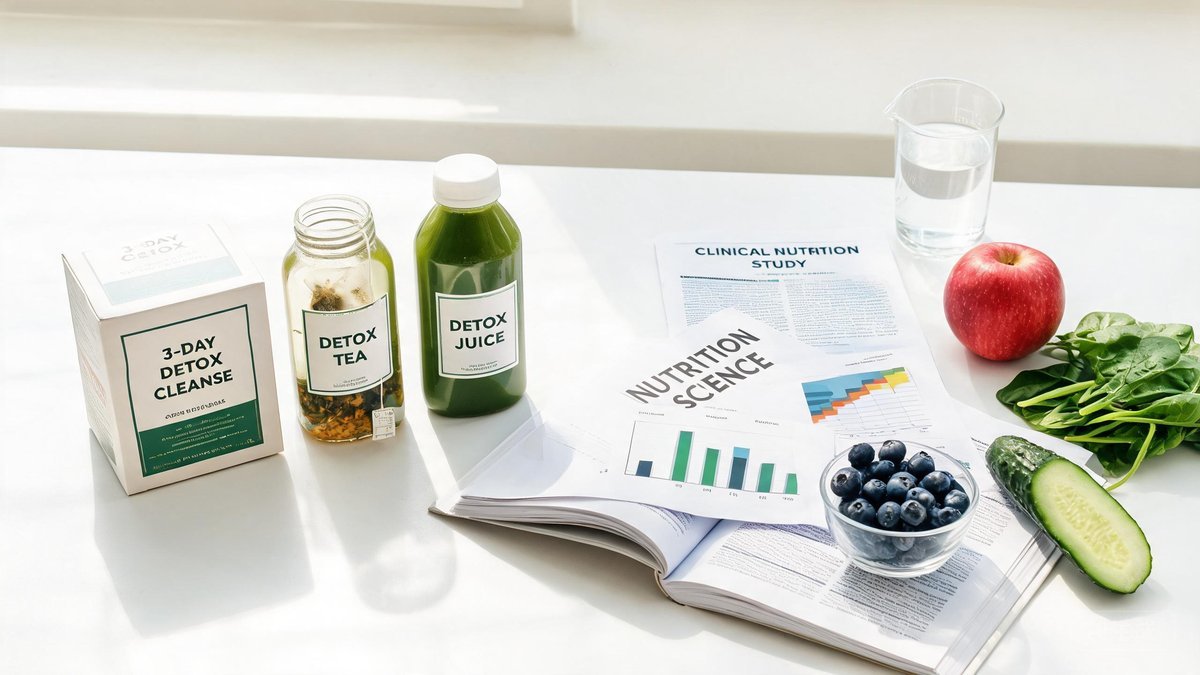
Juice cleanses promise purification through liquefied produce. Strip away the marketing, and you'll find a different story. A typical 3-day juice cleanse delivers fewer than 1,000 calories daily, often under 20 grams of protein, and virtually zero dietary fiber—since juicing removes the pulp where fiber lives. Fiber is one of your body's most critical tools for escorting waste out through the digestive tract. Removing it to "cleanse" makes about as much sense as draining your car's oil to improve engine performance.
Nutrition Science: The World Health Organization classifies processed meats as Group 1 carcinogens. Eating 50g daily — roughly one hot dog — increases colorectal cancer risk by 18%.
Within 24 hours of starting a juice-only regimen, your body burns through stored glycogen. You lose water weight quickly—sometimes 3 to 5 pounds in the first two days—which feels exhilarating. That number on the scale drops, and you think it's working. But you haven't lost fat. You've lost glycogen-bound water, and you're on the brink of muscle protein breakdown because your protein intake has cratered. A 2017 study in Nutrients found that very-low-calorie liquid diets often cause significant lean muscle loss alongside fat loss, slowing your resting metabolic rate in the process. That's the opposite of what you want for long-term health.
You'll also notice something else around day two: irritability, headaches, and brain fog. Detox advocates call this a "healing crisis" or "toxins leaving the body." It's actually low blood sugar and electrolyte shifts. Your brain runs on glucose. When you slash calories and eliminate solid food, your cognitive function dips predictably. No mystical cleansing required.
Practical takeaway: If you really want a "reset," try a day of whole-food eating: steamed vegetables, lean protein, whole grains, and plenty of water. You'll get fiber, nutrients, and sustained energy—without the crash.
Detox Teas and Supplements: Open the Box, Read the Risk
The global detox tea market was valued at roughly $1.8 billion in 2022 and continues climbing. Walk into any health store, and you'll see shelves lined with "flat tummy" teas, "liver cleanse" capsules, and "colon sweep" powders. What's actually inside? Most detox teas contain senna leaf—a natural laxative—blended with dandelion, nettle, or uva ursi, all of which have diuretic effects. Together, they make you lose water through your bowels and bladder. That's it. That's the magic.
Using laxatives regularly disrupts your gut's natural motility. Over time, your colon can become dependent on stimulation to produce a bowel movement, leading to chronic constipation when you stop. A 2020 case report in the American Journal of Gastroenterology documented a 34-year-old woman who developed severe cathartic colon syndrome after two years of daily detox tea use. Her large intestine had essentially lost its ability to contract on its own. She required long-term medical management.
Detox supplements aren't regulated like drugs. In the United States, the FDA doesn't test dietary supplements for safety or efficacy before they hit the market. A 2018 analysis by the Journal of the American Medical Association found that roughly 23,000 emergency department visits annually stem from supplement-related adverse events, with weight-loss and "cleansing" products among the top offenders. Liver damage, kidney stress, and severe electrolyte imbalances have all been linked to herbal detox formulations.
Practical takeaway: You're paying premium prices for laxatives and diuretics dressed in wellness branding. If you're concerned about your digestive regularity, drink more water, eat more fiber, and move your body. Those three interventions beat any tea on the shelf.
Why a Detox Feels Good—At First
It's not your imagination. During the first 48 hours of a cleanse, you might feel lighter, clearer-headed, and oddly accomplished. There's a reason for that, and it's not toxin elimination. The placebo effect accounts for a substantial chunk of perceived detox benefits. A 2015 meta-analysis in BMJ Open examining placebo responses across dietary intervention studies found that expectation-driven improvements can account for up to 40% of self-reported wellness outcomes. When you believe a juice cleanse will make you feel renewed, your brain complies by amplifying positive sensations and downplaying discomfort.
There's also the simple reality of elimination. You've stopped eating processed foods, alcohol, refined sugar, and late-night snacks. Any human would feel better after cutting those out for a few days. But that's not detoxification—that's just eating less junk. You could achieve the same clarity by cooking a simple vegetable stir-fry instead of ordering takeout.
The crash typically arrives by day three. Your energy plummets. Cravings intensify. Sleep gets wonky. Detox promoters frame this as "the toxins coming out." Physiologically, it's your body conserving energy in response to severe calorie restriction. Cortisol rises. Thyroid hormones dip. Your sympathetic nervous system stays activated. You're not purifying—you're starving, and your body is sending distress signals.
Practical takeaway: That initial lightness isn't a detox miracle. It's what happens when you stop eating processed foods for 48 hours. Try doing that with real, whole-food meals, and you'll feel the same clarity without the crash.
What Science Actually Recommends for Real Detoxification
Let's talk about supporting the detox system you already have—your liver, kidneys, gut, and lymphatic network. These organs don't need a juice fast. They need consistent, evidence-backed support. Cruciferous vegetables—broccoli, cauliflower, kale, Brussels sprouts, and cabbage—contain glucosinolates, which activate Phase II detoxification enzymes in the liver. Research from the Journal of Nutrition suggests that regular consumption of cruciferous vegetables can boost these enzyme pathways by up to 30%, enhancing your liver's ability to neutralize and excrete genuine harmful compounds like environmental pollutants and metabolic byproducts.
Hydration matters enormously. Your kidneys filter roughly 180 liters of blood daily and produce about 1.5 liters of urine. When you're dehydrated, that filtration slows down. Waste products hang around longer than they should. The fix isn't a specialty detox water. It's plain, consistent water intake—about 2 to 3 liters daily for most adults, adjusted for activity level and climate.
Sleep is your brain's detox window. The glymphatic system—your central nervous system's waste-clearance mechanism—ramps up significantly during deep sleep. A groundbreaking 2013 study in Science demonstrated that cerebrospinal fluid flushes through brain tissue during sleep, clearing out metabolic waste including beta-amyloid proteins linked to Alzheimer's disease. Skimp on sleep, and you literally short-circuit your brain's nightly cleaning cycle. No detox tea can compensate for chronic sleep deprivation.
Fiber deserves special mention. Soluble fiber binds to bile acids in your gut, which carry waste products excreted by the liver. When fiber escorts these bile acids out through your stool, your liver pulls more cholesterol from your blood to make fresh bile acids, naturally lowering circulating cholesterol and removing waste simultaneously. Aim for 25 to 30 grams of fiber daily from fruits, vegetables, legumes, and whole grains.
Practical takeaway: Eat cruciferous vegetables several times a week. Drink water throughout the day. Prioritize 7 to 9 hours of sleep. Hit your fiber target. That's your science-backed detox protocol—no invoice required.
The Gut-Liver Axis: Your True Detox Powerhouse
Your gut and liver don't operate in isolation. They form what researchers call the gut-liver axis—a two-way communication network that determines how efficiently your body handles everything from dietary fats to environmental chemicals. Roughly 70% of your immune system resides in your gut-associated lymphoid tissue. When your gut barrier is healthy, it prevents harmful substances from crossing into your bloodstream and reaching your liver. When that barrier gets compromised—through poor diet, chronic stress, or overuse of laxatives—your liver faces an increased toxic load it must process alone.
This is where detox teas become particularly counterproductive. Laxative ingredients like senna irritate the intestinal lining and can disrupt the delicate mucus layer protecting your gut wall. A 2019 study in Frontiers in Pharmacology raised concerns about long-term anthranoid laxative use (the class senna belongs to) and its association with melanosis coli—a darkening of the colon lining—and potential changes in gut innervation. You're trying to "cleanse," but you might be damaging the very barrier that keeps genuine threats out of your system.
Fermented foods—yogurt, kefir, sauerkraut, kimchi—deliver live probiotic bacteria that support gut barrier integrity. Prebiotic fibers from garlic, onions, asparagus, and slightly underripe bananas feed your beneficial gut bacteria. A diverse, well-fed microbiome strengthens the gut-liver axis, helping your liver do its job without becoming overburdened. That's actual detoxification support, grounded in microbiology rather than marketing.
Practical takeaway: Protect your gut barrier instead of assaulting it with laxatives. Fermented foods and fiber-rich vegetables do more for your body's detox capacity than any tea ever could.
The Bottom Line: Spend Your Money on Food, Not Flushes
The detox industry thrives on a simple psychological hook: it convinces you that you're dirty, then sells you the soap. But your body isn't a clogged drainpipe. It's a living, adaptive organism with extraordinary self-cleaning capabilities. Every dollar you spend on detox products is a dollar not spent on the foods that actually support your liver, kidneys, and gut.
Next time someone pitches you a 7-day cleanse, ask yourself: what specific toxins is this product removing, and what evidence supports that claim? In virtually every case, the answer will be vague hand-waving about "environmental toxins" and "impurities." Your liver doesn't need vague hand-waving. It needs consistent nourishment, adequate hydration, regular movement, and quality sleep. Give it those things, and it'll outperform any detox kit on the market—for free, for life.