Table of Contents
You've heard it your whole life: drink eight glasses of water a day. It's one of those rules that gets repeated so often nobody bothers to question it anymore. Your fitness tracker nags you about it. Your office water cooler has become a social hub. And somewhere along the way, you started feeling guilty every time you realized you'd only had four glasses by dinner. But here's the thing—that famous 8-glass rule has almost no scientific backing. Your hydration needs are far more personal than a one-size-fits-all number. Let's walk through what the research actually says about how much water you need, how your body manages its fluid supply, and how to build a hydration plan that fits your actual life.
The 8-Glass Rule: Where It Came From and Why It's Wrong
The recommendation to drink eight 8-ounce glasses of water daily traces back to a 1945 report from the U.S. Food and Nutrition Board. That report suggested adults need roughly 2.5 liters of water per day—but it also included a sentence that everyone seems to have skipped: "Most of this quantity is contained in prepared foods." In other words, the original guideline already accounted for the water you get from your meals. Over the decades, the food part got dropped and the number got simplified into the catchy 8x8 rule we know today.
A 2002 study published in the American Journal of Physiology reviewed decades of hydration research and found no scientific evidence to support the 8-glass recommendation. The lead researcher, Dr. Heinz Valtin, scoured the literature for any study linking eight glasses of daily water to specific health outcomes. He came up empty. The body's thirst mechanism, he concluded, does a remarkably efficient job of telling healthy people when they need to drink. For most adults, drinking when you're thirsty is a perfectly adequate strategy.
So why does the myth persist? Bottled water companies have poured billions into marketing that equates hydration with health and health with their product. Sports drink brands added electrolytes to the narrative, convincing you that plain water isn't enough. The result is a population walking around with oversized water bottles, anxiously tracking ounces, convinced they're perpetually on the edge of dehydration. The reality is far less dramatic.
Practical takeaway: Stop counting glasses. Your thirst mechanism works. Listen to it first, and use water intake targets only as a loose guideline, never a rigid rule.
How Your Body Regulates Fluid Balance—Constantly
Your body manages water with an elegance that no app can match. The hypothalamus—a small region at the base of your brain—houses osmoreceptors that continuously sample your blood's concentration. When sodium levels creep too high, indicating that your plasma is getting concentrated, these sensors trigger thirst and signal your pituitary gland to release antidiuretic hormone, or ADH. ADH tells your kidneys to hold onto water instead of sending it to your bladder. That's why your urine turns dark yellow when you're genuinely dehydrated: your kidneys are conserving every drop.
Nutrition Science: The National Sleep Foundation reports that adults who exercise for 150 minutes a week fall asleep 45% faster and report 65% better sleep quality.
When you're well-hydrated, the system reverses. ADH levels drop, your kidneys allow more water to pass, and your urine turns pale or clear. This feedback loop operates within minutes and adjusts to your activity level, ambient temperature, salt intake, and dozens of other variables you never think about. It's not a system that needs micromanagement. It needs you to pay attention to its signals.
What disrupts this system? Age plays a role—thirst perception declines after about age 60, which is why older adults need to be more intentional about fluid intake. Certain medications, including diuretics and some antidepressants, alter fluid balance. And chronic high blood sugar, as seen in uncontrolled diabetes, can overwhelm the kidneys' ability to concentrate urine, leading to excessive water loss and unquenchable thirst. For healthy adults under 60, though, the system runs largely on autopilot.
Practical takeaway: Your hypothalamus and kidneys form an automatic hydration thermostat. Trust it unless you have a specific medical condition or are exercising intensely in hot weather.
What Dehydration Actually Does to Your Body
Genuine dehydration isn't a slight thirst you've been ignoring for an hour. It's a measurable deficit of total body water, and it affects you far more than most people realize. At just 1 to 2 percent body mass loss from fluid deficit—roughly the amount you might lose during a moderate workout without drinking—cognitive performance starts to slip. A 2018 meta-analysis in Medicine and Science in Sports and Exercise pooled data from 33 studies and found that mild dehydration consistently impairs attention, short-term memory, and executive function. Reaction times slow. Errors on complex tasks increase. You feel tired and irritable, and you might not even connect those feelings to hydration.
Physical performance drops faster. At 2 percent dehydration, your heart works harder to pump thicker blood, your core temperature rises faster, and your perceived exertion climbs—the same workout feels significantly more difficult. At 4 percent, nausea and dizziness set in. At 5 to 6 percent, heat stroke becomes a real risk. These levels rarely happen during daily life for healthy people with access to water. They're seen in endurance athletes, outdoor workers in extreme heat, and people suffering from vomiting or diarrhea.
Here's a sign that actually works better than counting glasses: urine color. Pale straw is your target. Clear means you're drinking more than you need. Dark yellow or amber suggests you should drink sooner rather than later. Brown or rust-colored urine warrants a doctor visit, not just a glass of water. This simple visual cue correlates well with hydration status and costs nothing to use.
Practical takeaway: Check your urine color once or twice a day. Pale yellow means you're in the sweet spot. Dark means drink. Clear means you can ease up.
Beyond Plain Water: The Role of Electrolytes
Water doesn't work alone. Your body's fluid compartments—inside cells, between cells, and within blood vessels—are separated by membranes that water crosses freely. Electrolytes—primarily sodium, potassium, chloride, magnesium, and calcium—create the osmotic gradients that pull water where it needs to go. Drink a gallon of plain water without any electrolytes, and you'll dilute your blood sodium to a point called hyponatremia. It's rare but dangerous: your cells swell, including brain cells, leading to confusion, seizures, and in extreme cases, death.
Most people eating a standard diet get plenty of sodium—often too much. But potassium, found in fruits and vegetables, is where many diets fall short. The sodium-potassium pump in every cell membrane moves these two minerals in opposite directions, maintaining the electrical gradient that powers everything from muscle contractions to nerve impulses. Bananas, potatoes, spinach, beans, and avocados are excellent potassium sources. You don't need a sports drink after sitting at a desk for three hours. You might benefit from one after a 90-minute run in August heat.
Magnesium deserves more attention than it gets. This mineral supports over 300 enzymatic reactions, many involved in energy production and muscle function. Muscle cramps during exercise don't always mean you need more water—they often signal low magnesium or potassium. A 2017 review in Nutrients noted that roughly half of Americans don't meet the recommended daily intake for magnesium. Nuts, seeds, leafy greens, and whole grains can close that gap without a supplement bottle.
Practical takeaway: Plain water handles daily hydration perfectly well. Electrolyte drinks earn their place during prolonged exercise, hot-weather labor, or illness involving fluid loss. For everyone else, a balanced diet provides what you need.
Food Is a Major Water Source—Yes, Really
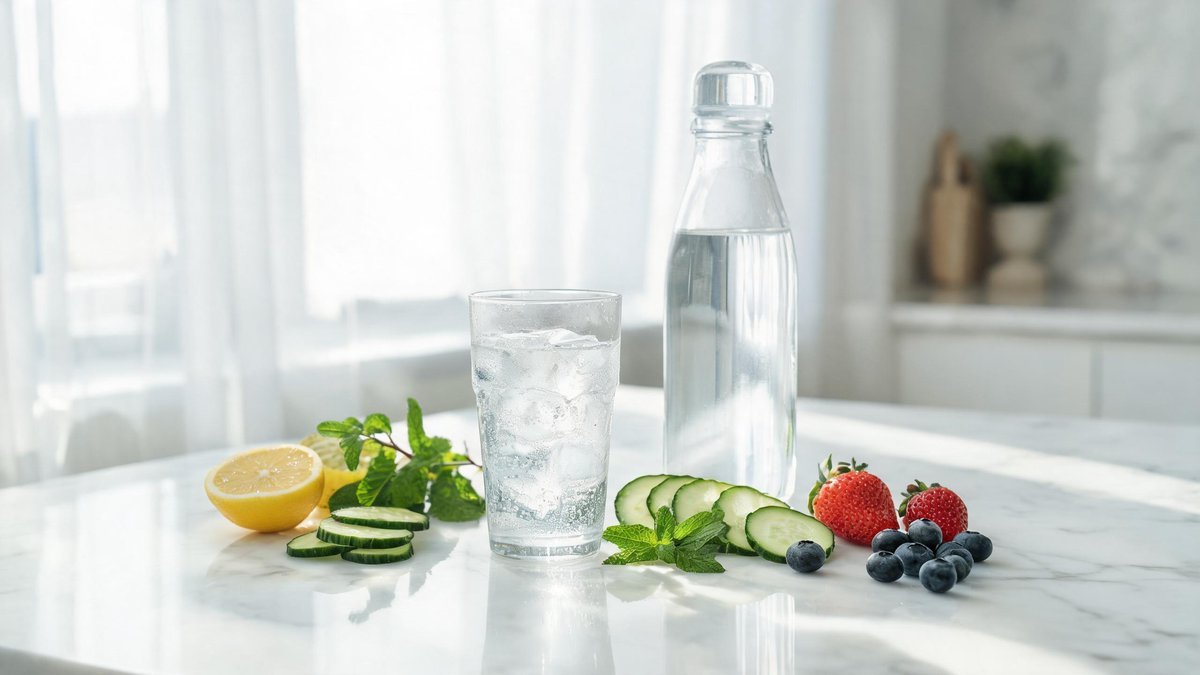
Here's a fact that might change how you think about your daily water target: roughly 20 percent of your total water intake comes from food. Some foods barely qualify—crackers, jerky, dry cereal. Others are essentially water with structure. Cucumbers are 96 percent water. Lettuce, celery, and zucchini hover around 95 percent. Watermelon, strawberries, and cantaloupe sit above 90 percent. A tomato is 94 percent water. A bowl of vegetable soup isn't just food—it's a significant contribution to your daily fluid balance.
This is the piece that the original 1945 recommendation included but modern water-bottle culture forgot. Someone eating a produce-rich diet might get a liter or more of water from their meals without ever thinking about it. Someone eating mostly dry, processed foods might need to drink significantly more to compensate. This explains why hydration needs feel so different from person to person. Your diet fundamentally changes the equation.
The type of food matters beyond just water content. High-sodium meals temporarily increase your fluid needs as your body works to maintain sodium balance. High-protein diets increase the solute load your kidneys must filter, which requires more water. High-fiber meals slow gastric emptying and hold water in the gut, extending hydration delivery over several hours. A salad with grilled chicken and olive oil isn't just nutritious—it's a time-release hydration system.
Practical takeaway: If you eat plenty of fruits, vegetables, soups, and stews, you're already getting significant hydration from your plate. Track your food for a few days, and you might be surprised how much less you need to drink than the apps suggest.
A Practical Hydration Plan That Actually Works for You
Let's move past the guilt and build something useful. Most healthy adults need roughly 2 to 3 liters of total water daily from all sources—drinks plus food. That's a wide range because your needs shift with your activity level, your environment, your diet, and your individual physiology. A 120-pound office worker in a climate-controlled building needs less than a 200-pound construction worker in Phoenix in July. Common sense applies here more than a calculator.
Start by paying attention to thirst for one full week. Don't count anything. Don't track anything. Simply notice when you feel thirsty and drink something—water, tea, milk, whatever you reach for. Notice when you don't feel thirsty. Notice how your urine looks at different times of day. Most people discover that their bodies already send clear signals; they've just trained themselves to ignore them in favor of arbitrary targets.
Then consider your context. Exercising today? Drink a glass of water an hour beforehand, sip during your workout if it lasts more than 45 minutes, and drink afterward until your urine returns to pale yellow. Working outside in heat? Increase your intake and consider a small salty snack or electrolyte drink to replace what you're sweating out. Pregnant or breastfeeding? Your fluid needs increase by roughly 300 to 700 milliliters per day respectively. Drinking alcohol tonight? Have a glass of water between drinks and one before bed—your morning self will thank you.
The best hydration indicator costs nothing and never needs charging. If you're peeing every two to four hours and the color is pale yellow, you're doing fine. If it's been six hours and your urine is dark, drink something. If your mouth feels dry, you're already slightly behind—catch up. These signals outperform any app on the market because they respond to your body, not a population average.
Practical takeaway: Ditch the guilt. Trust your thirst. Check your urine color. Eat water-rich foods. Drink more when you sweat more. That's the evidence-based hydration plan—no subscription required.