Table of Contents
Counting calories, tracking macros, weighing every gram of food — for many people, this approach to healthy eating feels overwhelming and unsustainable. The good news? There's a much simpler way. The balanced plate method is a visual, intuitive approach to building nutritious meals without any math or measuring.
Recommended by nutritionists worldwide, including those at Harvard's School of Public Health, this method takes the guesswork out of healthy eating. Here's exactly how it works.
Why the Balanced Plate Beats Calorie Counting
Research consistently shows that focusing on food quality and overall dietary patterns leads to better long‑term health than obsessing over calorie counts. A 2022 review in the Journal of Nutrition found that plate‑based guidance improves vegetable intake by an average of 1.5 servings per day and reduces the risk of overeating because the visual cue of plate division naturally controls portions. Instead of feeling deprived, you focus on what to add — colorful vegetables, lean proteins, and whole grains — which creates a positive, sustainable habit loop.
Key insight: When you fill half your plate with vegetables, you automatically eat more fiber and fewer calorie‑dense foods, no calculator required.
The Simple Formula: 50-25-25
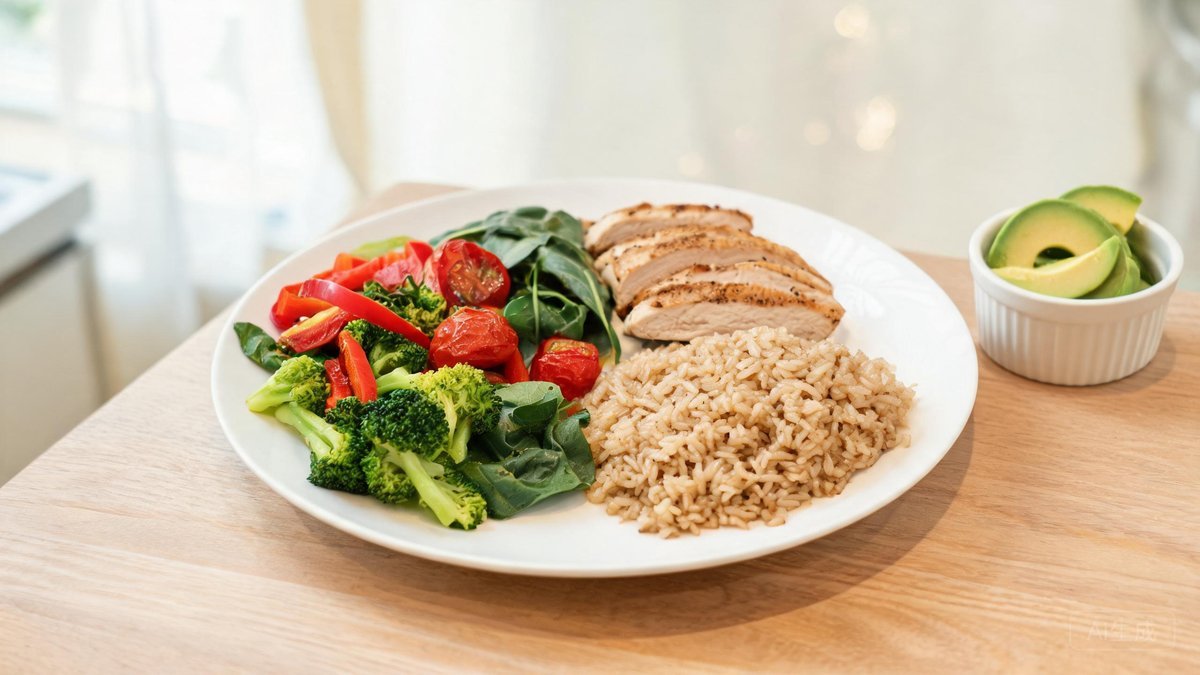
Imagine your plate divided into three sections. This is the basic framework:
- Half the plate (50%) — Vegetables and fruits: The foundation of every meal. Aim for a colorful variety, with an emphasis on vegetables over fruits.
- One quarter (25%) — Lean protein: The building block for muscles, enzymes, and hormones.
- One quarter (25%) — Whole grains or starchy vegetables: Your body's primary energy source.
That's it. No counting, no tracking, no apps. Just this simple visual guide applied to every meal.
Section 1: Fill Half Your Plate with Vegetables and Fruits
Why half? Vegetables and fruits are nutrient-dense but calorie-light. They provide the vitamins, minerals, antioxidants, and fiber your body needs, while naturally helping with portion control by filling you up with fewer calories.
Key guidelines for this section:
- Prioritize vegetables over fruits — aim for a 3:1 ratio of vegetables to fruits across your day
- Eat the rainbow: Different colors mean different nutrients. Dark leafy greens, red peppers, orange carrots, purple cabbage — variety is key
- Both raw and cooked count: Some nutrients are more available when cooked (like lycopene in tomatoes), others when raw (like vitamin C)
- Frozen is fine: Frozen vegetables are flash-frozen at peak ripeness and are nutritionally comparable to fresh
Smart Ways to Boost Your Vegetable Intake
Struggling to hit that half‑plate goal? Try these practical hacks:
- Add a handful of baby spinach to your morning smoothie — you won’t taste it, but you’ll gain iron and vitamin K.
- Keep a container of pre‑chopped bell peppers, carrots, and cucumbers in the fridge for instant grab‑and‑go snacks.
- Use frozen mixed vegetables (broccoli, cauliflower, carrots) as a quick side — microwave and toss with a little olive oil and garlic.
- “Zoodle” or spiralize zucchini and carrots to replace half of your pasta; you still get the pasta satisfaction but double the vegetables.
Fruit: Choose Whole Over Juice
Fruit is healthy, but whole fruit is far superior to juice. A 250‑ml glass of orange juice contains the sugar of 3–4 oranges but none of the fiber that slows sugar absorption. A smart rule: pair your fruit with a protein or fat source — an apple with a tablespoon of almond butter, or berries in Greek yogurt — to keep blood sugar steady and prolong satiety.
Section 2: One Quarter for Lean Protein
Protein does more than build muscle. It's essential for immune function, hormone production, enzyme activity, and keeping you full between meals. A serving roughly the size of your palm is a good guide.
Healthy protein sources include:
- Fish and seafood (especially fatty fish like salmon for omega-3s)
- Poultry (chicken, turkey)
- Eggs
- Legumes (lentils, chickpeas, black beans)
- Tofu, tempeh, and edamame
- Lean cuts of red meat (in moderation)
- Greek yogurt and cottage cheese
Why Protein Distribution Matters
Many people eat most of their protein at dinner, but research suggests that spreading protein evenly across meals (around 25–30 grams per meal) optimizes muscle repair and satiety. For example, instead of a carb‑heavy breakfast, include two eggs or a serving of Greek yogurt to reach that quarter‑plate protein target early in the day. This small shift helps curb cravings and sustains energy until lunch.
Plant‑based protein tip: Combine legumes with grains (e.g., rice and beans, lentil soup with barley) to form complete proteins, providing all essential amino acids without animal products.
Section 3: One Quarter for Whole Grains
Carbohydrates aren't the enemy — the type matters. Whole grains provide sustained energy, fiber, B vitamins, and minerals. The key is choosing whole grains over refined ones.
Best choices:
- Quinoa (a complete protein!)
- Brown rice or wild rice
- Oats (steel-cut or rolled)
- Whole wheat pasta or bread
- Barley, farro, bulgur
- Starchy vegetables like sweet potatoes, corn, or winter squash also fit here
The Fiber Connection
Whole grains retain the bran and germ, delivering 2–3 times more fiber than their refined counterparts. Fiber not only supports digestion and lowers cholesterol, but it also feeds healthy gut bacteria. If you’re new to whole grains, increase intake slowly over a week and drink plenty of water to avoid bloating. One easy swap: replace white rice with a mix of half brown rice, half cauliflower rice for a gradual transition that keeps the plate balanced.
Don't Forget Healthy Fats
Healthy fats don't have their own section on the plate, but they're essential. Think of them as the "seasoning" that brings everything together. Add 1-2 tablespoons per meal from sources like olive oil, avocado, nuts, seeds, or a drizzle of tahini.
Quick Tip: Use the "thumb rule" for fats — a serving of oil, butter, or nut butter should be about the size of your thumb (1-2 tablespoons).
Fat‑Soluble Vitamins Need Fat
Vitamins A, D, E, and K are absorbed only in the presence of dietary fat. That means a salad dressed with a vinaigrette or a drizzle of extra‑virgin olive oil makes the beta‑carotene from carrots and lutein from spinach far more bioavailable. So by adding a small amount of healthy fat to each meal, you’re not just enhancing flavor — you’re unlocking the full nutritional potential of your vegetables.
Putting It All Together: Example Meals
Here's what a balanced plate looks like for different meals:
- Breakfast: Half plate of sautéed spinach and tomatoes + quarter plate of scrambled eggs + quarter plate of whole-grain toast with avocado
- Lunch: Half plate of mixed greens salad with cucumber and carrots + quarter plate of grilled chicken + quarter plate of quinoa
- Dinner: Half plate of roasted broccoli and bell peppers + quarter plate of baked salmon + quarter plate of brown rice with a drizzle of olive oil
Snack Plate Example
You can even apply the 50‑25‑25 principle to snacks. Fill half a small plate with sliced bell pepper and cherry tomatoes, add a quarter with a hard‑boiled egg, and a quarter with a few whole‑grain crackers. It’s a mini meal that keeps energy steady between lunch and dinner without a sugar crash.
Adapting to Different Cuisines
The balanced plate works for any style of food:
- Mexican bowl: Half plate lettuce, tomatoes, and grilled peppers; quarter plate black beans; quarter plate brown rice; topped with guacamole (healthy fat).
- Asian stir‑fry: Half plate stir‑fried bok choy, broccoli, and carrots; quarter plate tofu or shrimp; quarter plate soba noodles or brown rice.
- Italian pasta night: Half plate sautéed zucchini and cherry tomatoes; quarter plate grilled chicken breast; quarter plate whole‑wheat spaghetti; finished with a drizzle of olive oil and a sprinkle of Parmesan.
Why This Method Works Long-Term
The balanced plate method succeeds where strict diets fail because it's flexible, not rigid. You can adapt it to any cuisine — a stir-fry, a burrito bowl, a pasta dish, or a traditional dinner plate all work with this framework. It encourages abundance (eat more vegetables!) rather than restriction. And it builds nutritional intuition — over time, you'll naturally gravitate toward balanced meals without consciously thinking about it.
Natural Weight Management Without Tracking
By crowding out high‑calorie, low‑nutrient foods with vegetables, the balanced plate helps you feel full on fewer calories. A study from the University of Pennsylvania found that people who simply increased their vegetable intake without any other dietary rules lost an average of 3.5 kg (7.7 lbs) over 12 weeks. The plate method achieves the same effect effortlessly because it sets a visual limit on the more energy‑dense protein and grain sections.
It Builds a Healthy Relationship with Food
Constantly counting numbers can turn eating into a math problem, fostering guilt and anxiety. The balanced plate, on the other hand, promotes a positive, mindful approach. You learn to listen to your body’s hunger and fullness signals, and food becomes nourishment again — not a spreadsheet to be managed. This shift is crucial for long‑term adherence and mental well‑being.
Final Thoughts
Healthy eating doesn't require spreadsheets, apps, or a degree in nutrition. The balanced plate method is a lifelong, sustainable approach that works for the whole family. Start with your next meal — look at your plate and ask: is half of it vegetables? Do I have a source of protein? Are my grains whole? Small adjustments, made consistently, lead to big changes in your health.
And don’t forget the unsung hero of every meal: water. Make water your primary beverage, and you’ll support every function the balanced plate fuels — from digestion to metabolism. Together, a well‑composed plate and proper hydration form the simplest, most effective wellness habit you can adopt today.