Table of Contents
- Date Labels Aren't Safety Deadlines—They're Quality Suggestions
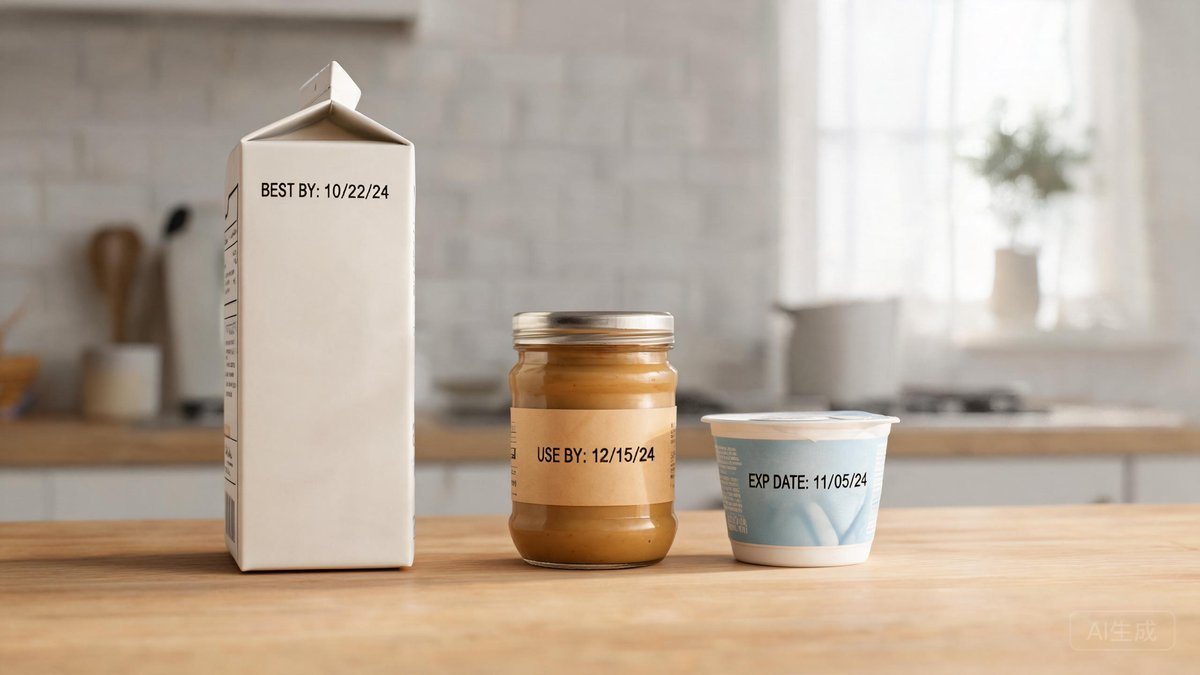
- Decode the Lingo: 'Best By,' 'Use By,' and 'Sell By' Mean Different Things
- Your Senses Are More Accurate Than the Date Stamp
- How Long Do Foods Really Last Past the Date? A Quick Guide
- Stop Tossing 'Expired' Pantry Staples—Here's Why
- The Real Danger Isn't the Date—It's How You Stored It
Date Labels Aren't Safety Deadlines—They're Quality Suggestions
Here's something that might surprise you: those "expiration" dates on your yogurt, cereal, and canned beans aren't what you think they are. The USDA confirms that date labels are almost always about peak freshness and flavor—not food safety. With the exception of infant formula, there are no federal regulations requiring product dating. In fact, up to 90% of Americans occasionally throw away perfectly safe food because they mistake a quality date for a danger sign. That confusion leads to a staggering 30–40% of the U.S. food supply going uneaten, according to the USDA's Economic Research Service.
Manufacturers pick the date they think will deliver the best taste experience. It's a guess, not a federally-mandated safety net. The real-world consequence? You're tossing billions of pounds of food—and dollars—every year. The next time you glance at that stamped number, remember it's a suggestion about texture and peak color, not a countdown to spoilage. Use your own judgment first. If a food looks, smells, and tastes normal, chances are it's still fine days or even weeks later. The date is a helper, not a hard stop. Trust your senses, and you'll cut waste without compromising safety.
Decode the Lingo: 'Best By,' 'Use By,' and 'Sell By' Mean Different Things
Not all date labels are created equal, and the wording matters more than you might realize. "Best if used by" is a quality marker. It tells you when the product will taste its absolute best. After that date, the crackers might soften or the chips might lose a bit of crunch, but they aren't hazardous. "Use by" is the last date recommended by the manufacturer for peak quality—again, not a safety cutoff except for infant formula, which is the only product category with federally regulated dating. "Sell by" is inventory guidance for stores; it helps retailers rotate stock. A 2020 study in the journal Waste Management found that standardizing these phrases could prevent nearly 400,000 tons of food waste annually in the United States alone.
Nutrition Science: Soluble fiber from oats and legumes can lower LDL cholesterol by 5-10% when consumed regularly. The FDA recommends 25-30g of total fiber per day.
Women, Infants, and Children (WIC) programs and some states do impose dating rules for specific items, but across the board, you won't find a single federal law that says you must dump food after the printed date. Milk labeled with a "sell by" date is often good for 5–7 days beyond that day if you've kept it cold. Canned soup that says "best by" 2022 can deliver a safe, tasty meal well into 2024 if the can stays undented. The key takeaway: learn to read the exact phrase. If it says "best if used by," think quality. If it says "use by," still check the food, don't rely solely on the stamp. For infant formula, however, always follow the "use by" date strictly because nutritional degradation and contamination risk increase after that point.
Your Senses Are More Accurate Than the Date Stamp
When in doubt, let your senses take the lead. Spoilage bacteria that turn milk sour or lunch meat slimy will scream for your attention through off-odors, weird textures, and visible mold. Pathogens that cause foodborne illness—like listeria or salmonella—can be much sneakier; they don't always produce a smell or change the appearance. But here's a critical stat: the CDC estimates that each year roughly 1 in 6 Americans gets a foodborne illness. However, the vast majority of those cases stem from cross-contamination during prep, improper cooking, or poor cold-holding, not from eating foods past their quality date.
Your nose knows sour dairy, your eyes spot mold on bread, and your fingers detect slime on deli meat. Yogurt that's a week past the "best by" date but smells tangy-fresh and shows no curdling or watery separation is almost certainly safe. Eggs? Try the float test: place an egg in a glass of water. If it sinks, it's fresh. If it stands on one end, it's still edible but you should cook it thoroughly. If it floats, toss it—gasses from decomposition have built up inside. Soft cheeses with a speck of surface mold? You can't save them because the mold's thread-like roots travel deep. Hard cheeses like cheddar or Parmesan can be salvaged by cutting off at least an inch around the moldy spot. The practical rule: trust sight, smell, and touch for obvious spoilage, but for long-expired refrigerated proteins, apply extra caution and heat them to safe internal temperatures.
How Long Do Foods Really Last Past the Date? A Quick Guide
You'll save a fortune once you know the true shelf life of everyday staples. The USDA says eggs in their shells stay safe to eat for 3–5 weeks after you bring them home from the store, even if the "sell by" date comes and goes. Milk will last 5–7 days beyond the "sell by" date when refrigerated at 40°F or below. Hard cheeses like cheddar and Swiss can go 3–4 weeks after opening if wrapped well, and block cheese beats pre-shredded hands down for longevity. Chicken breasts and ground beef are best cooked or frozen within 1–2 days of the "sell by" date, though these rely heavily on your cold chain.
Then there's the pantry. Unopened canned goods are champions of longevity. Low-acid cans like vegetables, meat, and soup will retain quality for 2–5 years, while high-acid cans like tomatoes and pineapple hold for 12–18 months. Dry pasta, rice, and oats can last 1–2 years stored in airtight containers. A 2019 analysis from the Food Marketing Institute found that confusion over these timelines leads the average household to discard $1,500 worth of food per year. To avoid that, start marking the actual purchase date on packaged foods with a permanent marker. That way you're tracking freshness from the moment you bought it, not from the manufacturer's best guess. Rotate older items to the front so you use them first, and freeze anything you can't finish in time—freezing stops the quality clock almost completely.
Stop Tossing 'Expired' Pantry Staples—Here's Why
A can of black beans with a "best by" date from last year isn't secretly plotting to make you sick. The canning process uses heat to destroy spoilage organisms, and the vacuum seal keeps new ones out. A recent survey by the International Food Information Council found that 68% of consumers believe canned foods expire right on the date printed. That belief leads to good food landing in the bin. In reality, an unopened low-acid canned product like corn or tuna can remain safe and tasty for up to 5 years, while high-acid fruits and tomato-based products stay great for at least 12–18 months. The only time you should immediately discard a can is when it's severely dented on the seam, bulging, leaking, or spurting liquid when opened—these are signs of botulism risk, a rare but serious illness.
Dried beans, lentils, and whole grains are even more forgiving. Stored in a cool, dry place, they last for years. White rice and dried pasta hold for 1–2 years without quality loss, while brown rice has a shorter window due to its higher oil content, around 6 months. Bread crumbs and crackers? If they taste stale but aren't moldy, you can revive them in a toaster or oven. Trust your own baseline: rancidity in nuts and oils gives a distinct crayon-like or bitter smell, which is your cue to discard. Otherwise, most dry packaged foods will safely outlive their date by months or even years. A simple visual scan and sniff before cooking catches the rare dud.
The Real Danger Isn't the Date—It's How You Stored It
You can have a carton of milk with a "sell by" date two days from now that's already spoiled, or one a week past the date that's perfectly fresh. The difference always comes down to temperature control. Bacteria that cause foodborne illness, like Staphylococcus aureus and Bacillus cereus, multiply fastest in the "danger zone" between 40°F and 140°F. At room temperature, their numbers can double every 20 minutes. A single bacterium can become over 2 million in just 7 hours. Considering that the average fridge door gets opened 30–40 times a day in a busy household, even small temperature fluctuations matter. The FDA recommends keeping the refrigerator at 40°F or below and the freezer at 0°F.
Storage practices trump the date stamp every time. Put groceries away fast—perishables shouldn't sit in the car trunk or on the counter for more than 2 hours total (1 hour if it's above 90°F outside). Store leftovers in shallow, airtight containers so they cool down quickly, not in deep pots that trap heat overnight. Keep raw meat on the lowest shelf to prevent drips onto produce. And don't overcrowd the fridge; air needs to circulate to maintain even temperatures. When you nail the cold chain, foods reliably last well beyond the printed date. The date is a helpful benchmark, but it's your habits—from grocery cart to fridge door—that actually determine what's safe to eat.