Table of Contents
If you have cut back on meat or gone fully plant-based, you have probably heard the question a hundred times: "But where do you get your protein?" The concern is overblown but not entirely baseless. Getting enough protein from plants requires more planning than eating a chicken breast. The good news: it is not complicated once you know the fundamentals.
This guide covers the top plant-based protein sources, clears up the protein combining myth, and gives you a practical framework for hitting your daily targets without meat, eggs, or dairy. Let's start with the foods that should anchor your plate.
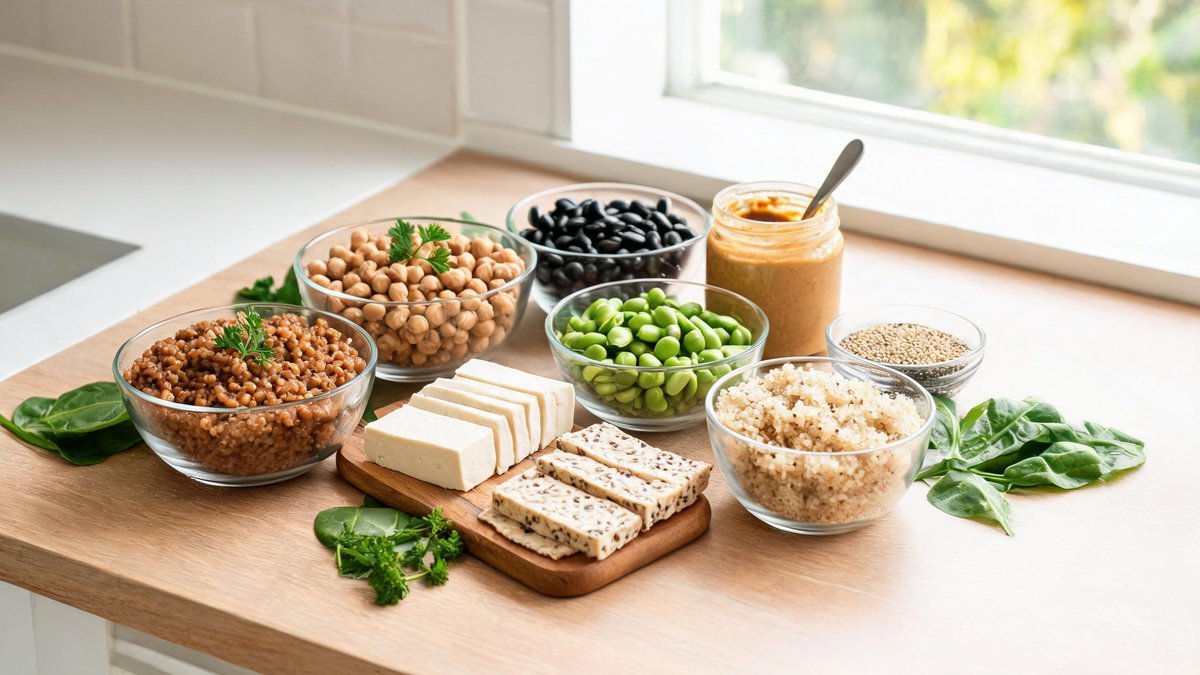
Lentils: The Everyday Protein Workhorse
Lentils deliver 18 grams of protein per cooked cup, along with 16 grams of fiber and more iron than most meats per calorie. They cook in 20 to 30 minutes with no soaking required, which makes them the single most practical plant protein for weeknight meals.
Red lentils break down into a creamy texture perfect for soups and dals. Brown and green lentils hold their shape and work well in salads and bowls. French black lentils have a peppery flavor and firmer bite that stands up to vinaigrettes.
A 2017 study in the American Journal of Clinical Nutrition tracked participants who swapped one serving of meat for legumes daily. After six weeks, the legume group showed improved blood sugar control and lower LDL cholesterol, without any loss in satiety or energy levels. In other words, lentils are not just a protein source; they actively improve health markers that meat does not.
Tofu and Tempeh: The Soy Protein Twins
Tofu and tempeh both come from soybeans but could not be more different in texture and nutritional profile. Firm tofu packs 10 to 12 grams of protein per 100-gram serving. Press it, marinate it, and toss it in a hot pan. The liquid you squeeze out makes room for flavor to soak in.
Tempeh is the underrated sibling. Made from fermented whole soybeans pressed into a dense cake, it delivers 19 grams of protein per 100 grams, nearly double tofu. Fermentation also breaks down compounds that can make soy hard to digest, and it partially produces vitamin B12, a nutrient vegans often need to supplement. Tempeh has a nutty, earthy flavor that works great sliced thin and pan-fried until golden.
One concern about soy involves phytoestrogens -- plant compounds that weakly mimic estrogen. Large-scale reviews, including a comprehensive 2020 meta-analysis in Cancer Epidemiology, found that moderate soy intake (1 to 3 servings daily) is not only safe but may actually reduce breast cancer recurrence risk by 26%. The fear was built on animal studies that do not translate to humans. Eat the tofu.
Quinoa: The Complete Protein Grain
Quinoa is one of the few plant foods that provides all nine essential amino acids in meaningful amounts -- the ones your body cannot make and must get from food. One cooked cup gives you 8 grams of protein, 5 grams of fiber, and a solid dose of magnesium, which most people do not get enough of.
A common mistake is treating quinoa like rice and calling it a day. Rinse it thoroughly before cooking to remove saponins, a natural coating that tastes bitter and soapy. Toast the rinsed quinoa in a dry pan for two minutes before adding water; this deepens the flavor significantly. Quinoa also cooks in about 15 minutes, making it faster than brown rice.
Seitan and Other Wheat-Based Proteins
Seitan, made from wheat gluten, is the highest-protein plant food at roughly 25 grams per 100-gram serving. Its texture is chewy and meat-like, which explains why many commercial mock meats use it as a base. If you have celiac disease or a wheat sensitivity, skip seitan entirely. For everyone else, it is a protein powerhouse.
Store-bought seitan often comes loaded with sodium (some brands hit 500 mg per serving). Making it at home from vital wheat gluten flour takes 45 minutes and lets you control exactly what goes in. Mix vital wheat gluten with spices, add water or broth to form a dough, knead briefly, then simmer in broth. The result costs about a third of the packaged version.
Protein Combining: What Actually Matters
You may have heard that plant proteins are "incomplete" and must be carefully combined at every meal -- rice with beans, for example. This idea originated from a 1971 book called Diet for a Small Planet. The author, Frances Moore Lappe, later corrected herself: you do not need to combine proteins at every meal.
Your body maintains a pool of amino acids from the foods you eat over a 24-hour period. As long as you eat a variety of plant proteins throughout the day -- grains, legumes, nuts, seeds -- your body pulls what it needs from that pool. The one amino acid worth paying attention to is lysine, which is lower in grains. Lentils, soy, and quinoa are all lysine-rich and cover this gap easily.
Protein Quality at a Glance: Soy, quinoa, and hemp seeds are considered "complete" plant proteins. Most other plant sources are low in one or two amino acids. Eating a mix of legumes, grains, nuts, and seeds across your day resolves this automatically.
Hitting Your Daily Protein Target on Plants
The standard recommendation is 0.8 grams of protein per kilogram of body weight. For a 70-kilogram (154-pound) adult, that is 56 grams per day. Athletes and highly active people need 1.2 to 1.6 grams per kilo. Here is what hitting 56 grams looks like with only plant foods:
- Breakfast: Oatmeal with 2 tablespoons hemp seeds and soy milk (18g protein)
- Lunch: Lentil soup with a slice of whole-grain bread (16g protein)
- Snack: Handful of roasted chickpeas and almonds (8g protein)
- Dinner: Quinoa bowl with tempeh and roasted vegetables (22g protein)
That gets you to 64 grams, above the recommended minimum, without any protein powder or processed meat substitutes. The key is including at least one protein-rich plant food in every meal, not just relying on vegetables and grains alone.
Putting It All Together
You do not need to weigh every gram of protein or memorize amino acid profiles. Keep three rules in mind: eat legumes at least once daily, include a variety of protein sources across the week, and do not fill up on empty carbs that crowd out protein-rich plants.
Start with the foods you already enjoy. If you like stir-fries, swap half the rice for quinoa and add marinated tofu. If you eat pasta regularly, try red lentil pasta, which packs 13 grams of protein per serving. Small swaps compound over time, and within a few weeks you will have built a plant-based protein routine that runs on autopilot.
Building a healthy eating pattern does not require drastic changes or eliminating entire food groups. Small, consistent adjustments produce results that last far longer than crash diets or extreme elimination protocols. The most effective approach is to add nutritious foods to your diet rather than focusing on what to remove. A handful of leafy greens added to your lunch, an extra serving of vegetables at dinner, or swapping refined grains for whole grains at one meal per day creates momentum that naturally displaces less nutritious options without the deprivation mindset that undermines most dietary changes. Over weeks and months, these micro-habits compound into meaningful improvements in energy levels, digestion, and overall health markers.
Meal preparation is the single most effective strategy for maintaining a healthy diet during a busy week. Setting aside two to three hours on a Sunday to wash and chop vegetables, cook a batch of whole grains, portion out proteins, and prepare a simple dressing or sauce eliminates the daily decision fatigue that leads to takeout and convenience foods. Invest in a few good-quality glass containers that allow you to see contents at a glance. Focus on components rather than complete meals -- having prepped ingredients on hand lets you assemble different combinations throughout the week without eating the same thing every day. The time invested in meal prep pays back dividends in reduced stress, better food choices, and significant cost savings.
Understanding the science behind nutrition helps separate evidence-based recommendations from the endless stream of diet trends and marketing claims. The quality of research matters enormously -- randomized controlled trials carry far more weight than observational studies, and systematic reviews that pool data from multiple studies provide the most reliable guidance. Be particularly skeptical of studies funded by food manufacturers or organizations with a vested interest in the outcome. A healthy dose of scientific literacy serves you well in navigating conflicting nutrition advice. When in doubt, the fundamentals are remarkably consistent across decades of research: eat plenty of vegetables and fruits, choose whole grains over refined, prioritize plant and fish proteins, and limit added sugars and ultra-processed foods.
Mindful eating transforms your relationship with food by shifting focus from rigid rules to genuine awareness. Paying attention to hunger and fullness cues, eating without distractions like phones or television, and savoring each bite allows your body's natural regulation systems to function correctly. Research shows that mindful eating practices reduce binge eating episodes, improve digestion, and lead to more satisfying meals with smaller portions. Start with a simple practice: before each meal, take three deep breaths and observe the colors, aromas, and textures on your plate. Eat slowly, putting your fork down between bites, and pause midway through to assess your fullness level. These small adjustments rewire deeply ingrained eating habits over time.
Eating well on a budget is entirely achievable with strategic planning and some simple techniques. Frozen vegetables and fruits are just as nutritious as fresh -- often more so, since they are flash-frozen at peak ripeness -- and cost significantly less while lasting far longer. Dried beans and lentils cost pennies per serving compared to canned versions and allow you to control sodium. Whole grains purchased in bulk from the bins section of your grocery store cost a fraction of packaged alternatives. Seasonal produce is both cheaper and more flavorful than out-of-season imports. Planning your weekly menu around what is on sale rather than deciding what you want and hoping for a deal can cut your grocery bill by 20 to 30 percent without sacrificing nutritional quality.